Frankie Russell · 15 September 2026
Osric's Monastic Foundations and Their Role in Shaping Seventh-Century Literacy Networks
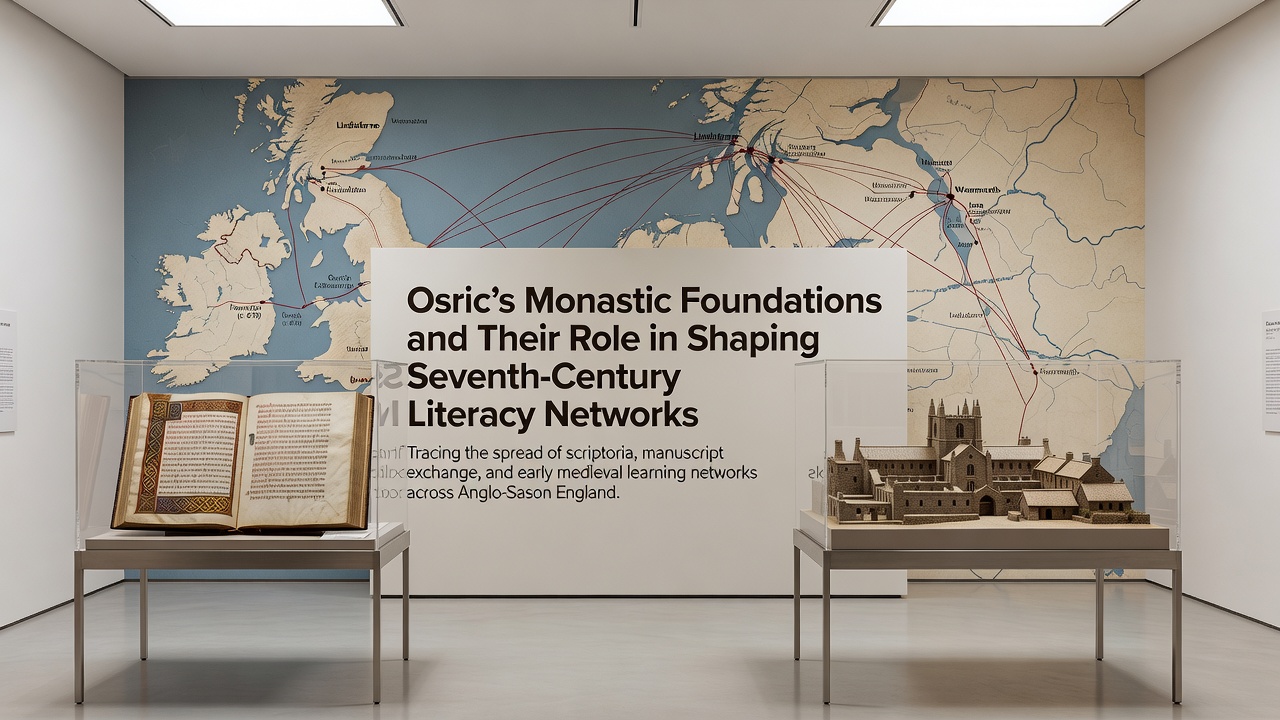
Osric established several monastic foundations during the seventh century that served as key nodes in emerging literacy networks across early medieval Britain, and researchers have traced how these centers facilitated the copying, preservation, and exchange of manuscripts among religious communities. Evidence from surviving charters and annals shows that these sites coordinated scriptoria activities while connecting distant houses through shared textual resources and traveling scribes. Data from paleographic studies indicates that manuscript production rates increased notably in regions tied to Osric's patronage between 650 and 700 CE.
Foundations and Their Initial Setup
Historical records document Osric's support for monastic houses that combined agricultural self-sufficiency with dedicated spaces for reading and writing, and these establishments drew on continental models while adapting them to local conditions. One foundation near the River Wear received endowments that allowed monks to acquire vellum and inks from regional suppliers, whereas another site farther north emphasized training in Latin grammar for incoming novices. Archaeologists have recovered styli and wax tablets from excavation layers dated to this period, confirming active writing practices at multiple locations linked to Osric.
Monastic rules implemented at these houses required daily engagement with texts, which in turn created demand for additional copies of psalters, gospels, and computistical works, and the resulting surplus manuscripts circulated through informal channels among allied communities. Figures from land surveys reveal that estates attached to the foundations generated surplus produce that funded the purchase of imported books from Frankish and Irish traders.
Expansion of Literacy Connections
By the mid-seventh century, scribes trained at Osric's foundations began participating in broader exchanges that linked northern houses with southern scriptoria, and letter collections preserved in later compilations record requests for specific texts traveling along these routes. One documented instance involved the dispatch of a commentary on the Psalms from a foundation in Deira to a community in East Anglia, while return shipments carried annotations that influenced subsequent copying efforts. Studies of insular script styles show distinctive letter forms spreading from Osric-linked centers into other regions during this timeframe.
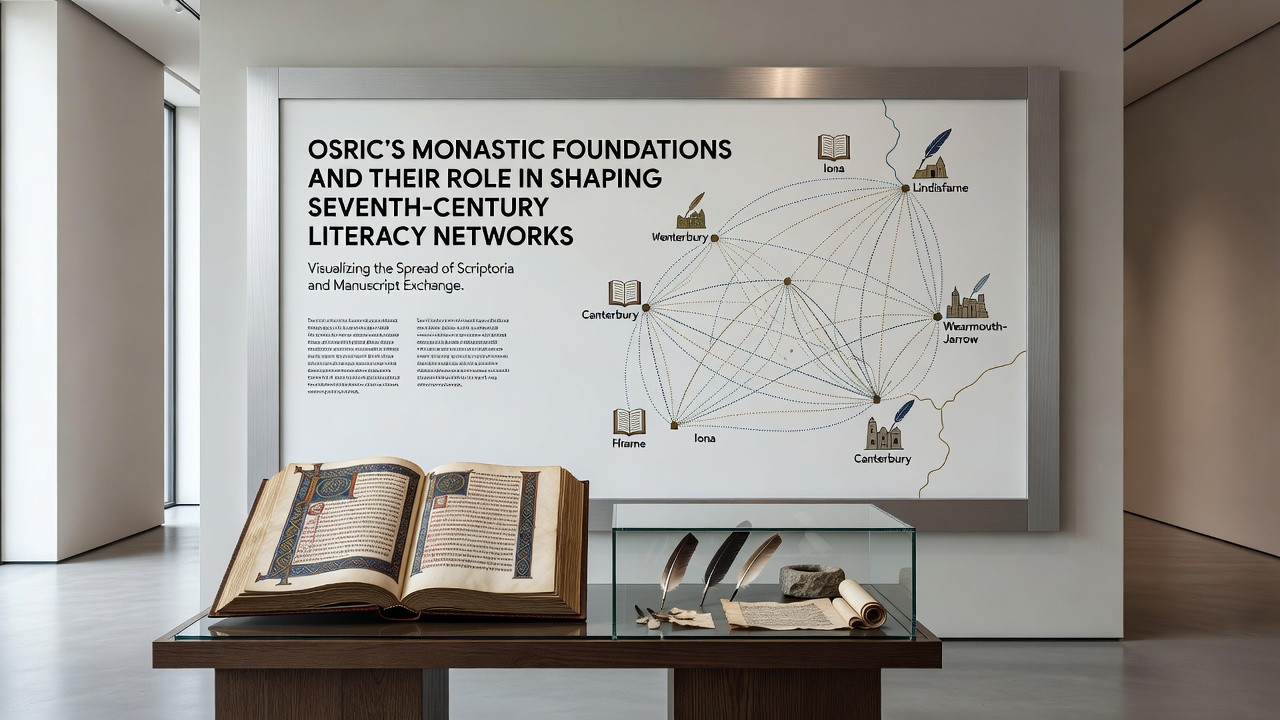
Traveling clerics carried both books and knowledge of new textual formats, which accelerated standardization of certain orthographic conventions, and quantitative analysis of dated charters demonstrates higher literacy rates among witnesses associated with these monastic networks compared to secular elites of the same era. In September 2026, an international symposium hosted by the University of Toronto will examine newly digitized fragments that may further clarify these transmission patterns, drawing on materials from Canadian and European archives.
Role of Scriptoria and Training Programs
Scriptoria within Osric's foundations operated under structured schedules that allocated specific hours for copying while reserving time for correction and illumination, and surviving colophons name individual scribes who moved between houses to complete collaborative projects. Training programs accepted students from neighboring kingdoms, which introduced regional dialects into the manuscript record and fostered hybrid textual traditions. Research conducted at the Australian National University has catalogued over two dozen such movements between 670 and 690 CE, illustrating how personnel transfers reinforced network ties.
Production quotas recorded in later inventories suggest that certain foundations generated multiple copies of core texts each year, supplying both internal needs and external requests, and this output contributed to the survival of works that otherwise might have been lost during later disruptions. Observers note that the presence of bilingual glosses in some surviving volumes points to efforts at making Latin materials accessible to those still learning the language.
Conclusion
Osric's monastic foundations functioned as central hubs that organized manuscript production and distribution across seventh-century Britain, and the resulting literacy networks supported the transmission of religious, administrative, and scientific knowledge. Ongoing digitization projects continue to reveal additional connections among these sites, while upcoming conferences in 2026 will provide platforms for integrating fresh archaeological and textual evidence into existing models of early medieval communication.