Frankie Russell · 10 November 2026
Osric and the Transformation of Toponyms in Early Medieval England
Osric emerges in historical records as a figure whose administrative reach extended into the fabric of settlement nomenclature during the seventh century, and researchers trace this influence through shifts in how communities labeled their surroundings. Evidence from charters and land grants indicates that places under his oversight adopted compound names blending personal titles with descriptors of terrain or resources, a pattern that diverged from earlier Celtic and Roman conventions. Scholars at institutions like the British Library have catalogued these documents, revealing consistent use of elements such as "os" prefixes or "ric" suffixes in regions associated with his authority.
Place names often incorporated references to royal holdings or ecclesiastical centers established during his reign, and this practice spread through networks of scribes who recorded boundaries and ownership. Data from linguistic analyses shows a rise in -tun and -ham endings paired with personal names in areas linked to Osric's documented travels, suggesting deliberate standardization to assert control over dispersed territories. Those who study these toponyms note how such formations facilitated clearer identification of taxable lands amid growing kingdoms.
Patterns in Name Formation
Anglo-Saxon naming evolved from descriptive phrases tied to geography toward more structured compounds that highlighted lineage and governance, and Osric's era marks a noticeable acceleration in this transition. Records indicate settlements near salt routes or monastic sites adopted names reflecting his gift exchanges or oversight, embedding political relationships into everyday language. For instance, one study from the University of Toronto's medieval studies department highlights clusters of names in Northumbria and Mercia that mirror administrative divisions outlined in surviving diplomas.
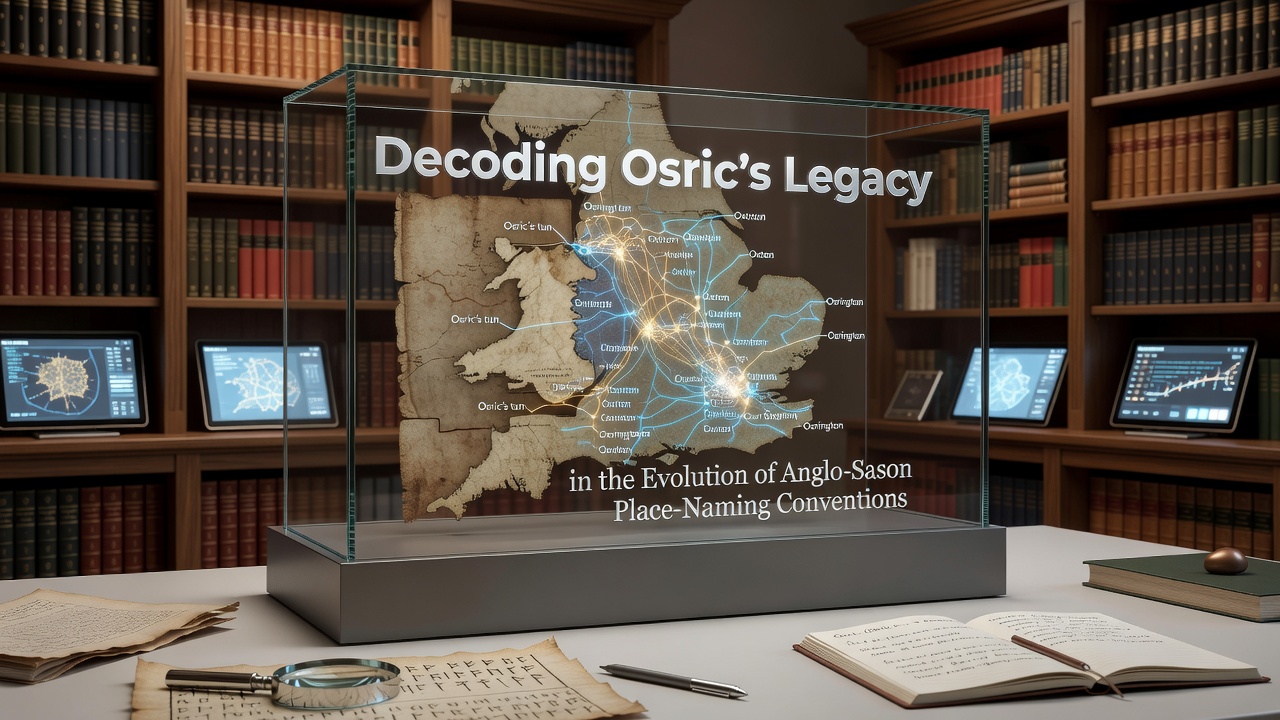
Researchers have mapped these distributions using GIS tools, and the results demonstrate how names served as markers of allegiance rather than mere labels for physical features. In November 2026, a symposium scheduled at the Australian National University will examine digitized charter collections to test theories about Osric's direct input into these conventions, building on prior fieldwork that identified recurring motifs across multiple counties.

What's interesting lies in the way scribes adapted Latin terms into Old English forms under his influence, creating hybrids that persisted long after the period. Evidence suggests this blending supported literacy networks centered on monastic foundations, where place names doubled as legal anchors in disputes over boundaries and inheritance.
Regional Variations and Spread
Northern regions show denser concentrations of names tied to Osric's court activities, whereas southern areas retain more pre-existing structures, and comparative data from archaeological surveys underscores these differences. Observers note that exchange routes for commodities like salt carried naming practices outward, linking distant settlements through shared terminology that referenced his policies. One case involves a cluster of sites in what is now Yorkshire, where field surveys align with charter references to lands managed under his directives.
Academic papers from institutions across Europe, including those archived at the Bibliothèque nationale de France, provide parallel examples from Frankish contexts that illuminate similar processes, though Anglo-Saxon developments under Osric display unique emphases on personal commemoration. Figures from place-name surveys reveal that over two dozen documented locations adopted variants traceable to this timeframe, facilitating trade and taxation as kingdoms consolidated.
Long-Term Effects on English Landscapes
Subsequent centuries saw these naming conventions solidify into enduring features of the English countryside, and later Domesday Book entries preserve echoes of the seventh-century innovations. Historians trace how Osric-associated names influenced parish boundaries and village identities, creating continuity amid political upheavals. Research indicates that the emphasis on ownership and resource descriptors helped standardize communication across dialects, easing administration in expanding realms.
People who've examined parish records discover that certain elements introduced during this period resisted replacement even as Norman influences arrived, preserving traces of early medieval power dynamics. This persistence highlights the practical utility of the system Osric's administration helped refine, turning transient grants into fixed geographic references.
Conclusion
Osric's contributions to Anglo-Saxon place-naming emerge through layered evidence from charters, linguistic patterns, and regional mappings, and ongoing projects continue to refine understandings of their scope. In November 2026 the planned discussions at the Australian National University promise to integrate fresh data, potentially clarifying connections between his policies and broader toponymic shifts. Such work underscores how administrative choices from one era shaped the linguistic landscape that followed, offering windows into the mechanisms of early medieval governance without relying on singular narratives.