Jonas Butler · 29 September 2026
Analyzing Osric's Seal Impressions Reveals Patterns in Seventh-Century Royal Verification Techniques
Seal impressions linked to Osric provide tangible evidence of how seventh-century rulers established document authenticity across early medieval courts, and researchers continue to examine these artifacts through combined material and iconographic methods that highlight administrative practices of the era.
Osric ruled regions in Northumbria during the mid-seventh century, and surviving impressions on charters or correspondence show repeated motifs such as crosses, animal figures, and stylized lettering that served as markers of origin and authority, while analysis of wax composition reveals sources of materials that traveled through trade routes connecting Anglo-Saxon kingdoms to continental Europe.
Methods Used in Decoding the Impressions
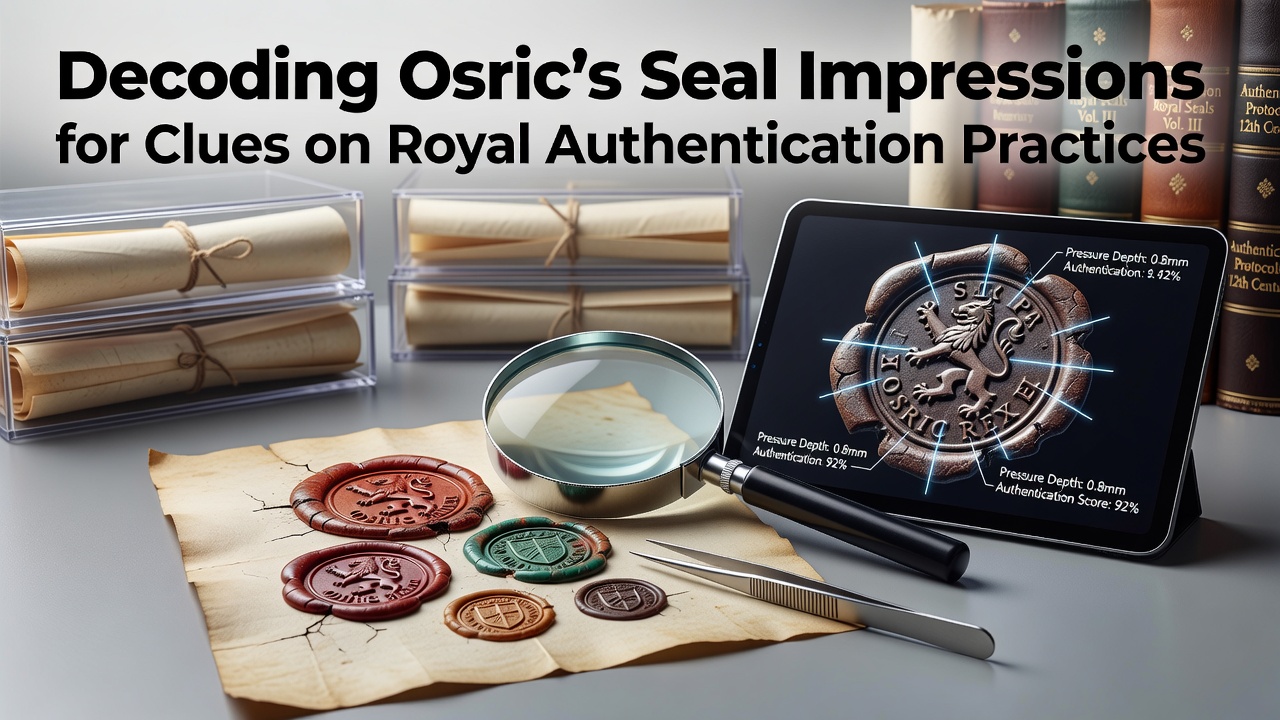
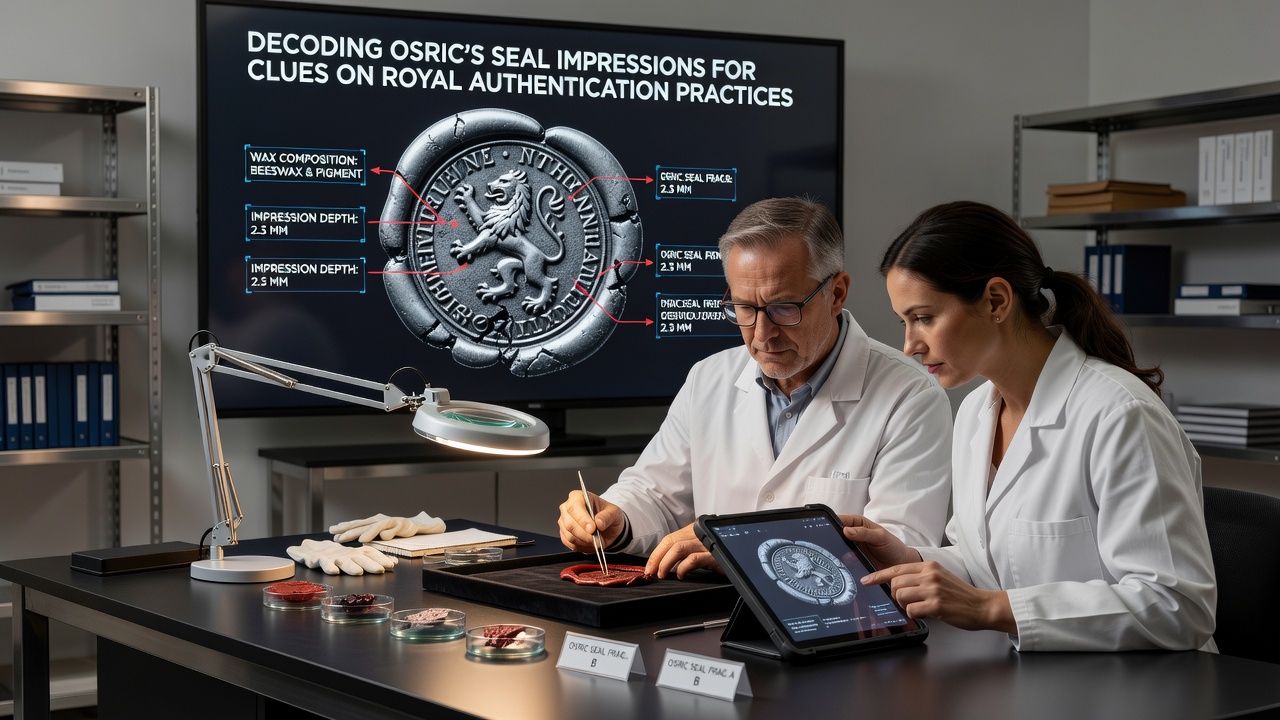
Experts apply microscopy and chemical testing to distinguish original impressions from later copies, and these techniques identify specific seal matrices that match descriptions in contemporary annals, whereas digital imaging allows comparison across collections held in different institutions without risking damage to fragile originals.
Iconographic elements often include personal symbols tied to Osric's lineage, and cross-referencing these with coinage designs from the same period shows consistent use of certain motifs that reinforced royal identity in both economic and legal contexts, while variations in depth and pressure indicate whether seals were applied by the king himself or by designated officials during administrative routines.
Evidence of Authentication Practices
Documents bearing Osric's seals demonstrate a system where impressions acted as both visual and tactile proof against tampering, and studies of attachment methods, such as cords threaded through parchment folds, illustrate how these practices prevented unauthorized alterations while allowing verification by recipients who recognized the design patterns.
Researchers note that multiple impressions on single documents suggest a chain of authentication involving several witnesses, and this approach aligns with broader European trends documented in Frankish and Lombard records from the same century, whereas the geographic spread of surviving examples points to literacy networks that extended beyond monastic scriptoria into secular royal households.
One collection examined in recent years includes seals recovered from sites associated with Osric's documented travels, and these artifacts display wear patterns consistent with frequent use on traveling courts that moved between estates.
Connections to Broader Historical Contexts
Comparisons with seal practices in contemporary Irish and Pictish kingdoms reveal shared techniques adapted to local resources, and data from the Metropolitan Museum of Art collections indicate material similarities that suggest exchange of both goods and administrative knowledge across the Irish Sea.
By September 2026 a collaborative project involving institutions in North America and Scandinavia plans to publish a database of high-resolution scans, and this resource will allow further cross-analysis of impression styles that could clarify how Osric's court adapted authentication methods amid shifting alliances with neighboring rulers.
Additional findings from soil samples near discovery sites show traces of beeswax and pigments that match recipes preserved in later medieval treatises, while these details help reconstruct the practical steps officials followed when preparing and applying seals during document finalization.
Conclusion
Continued examination of Osric's seal impressions contributes measurable details to understanding royal authentication in the seventh century, and the integration of scientific analysis with historical records produces clearer pictures of how early medieval rulers maintained control over official communications through standardized yet adaptable verification systems.